
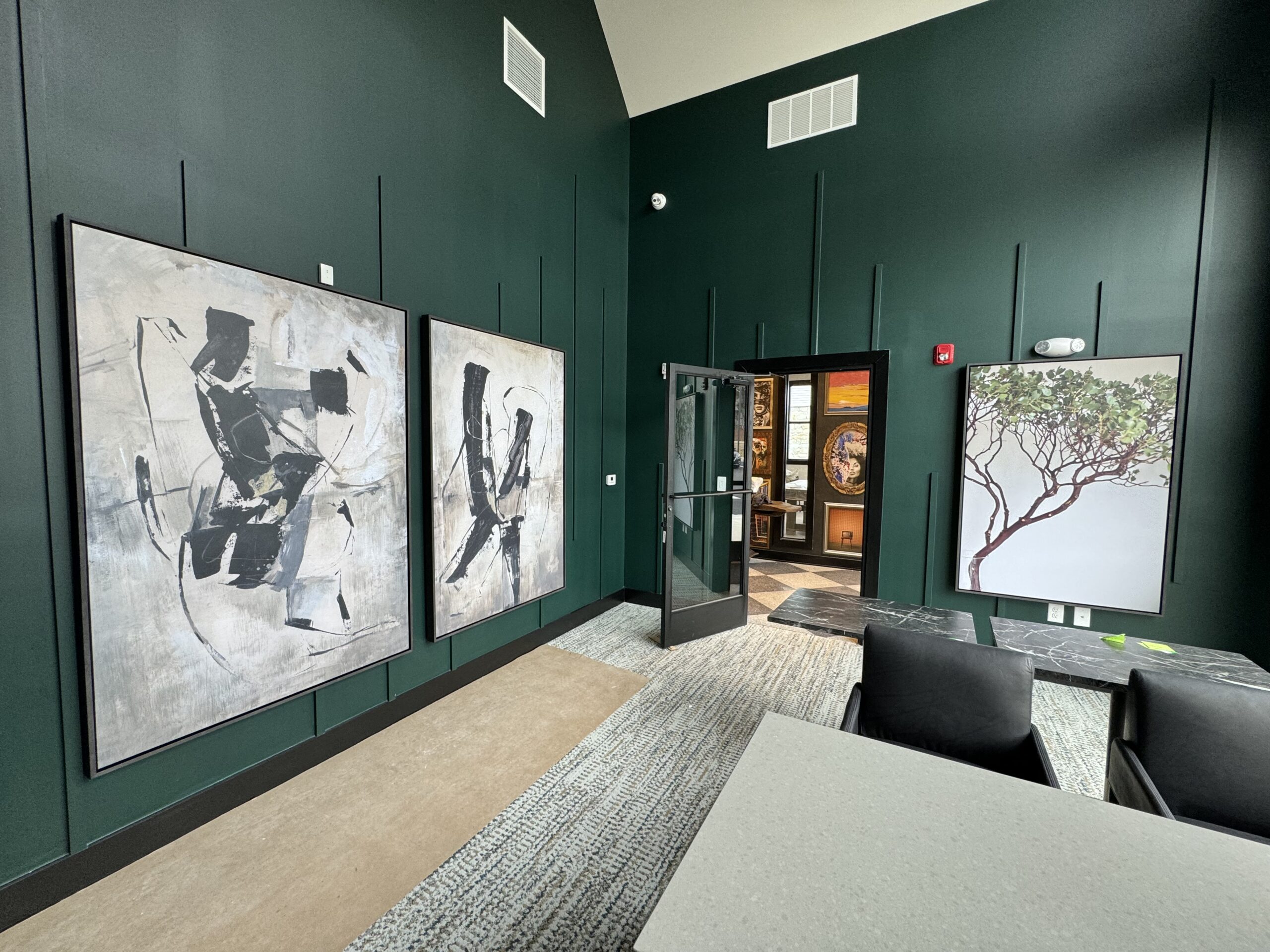
Framing is one of those design decisions that tends to go unnoticed when done well and draws attention immediately when done poorly. Custom framing in interior design ensures artwork feels like part of the space rather than something placed inside it. The right frame supports the room’s visual language, while a mismatched one creates friction that even non-designers can sense.
Framing as a Design Element
Frames are often treated as an afterthought, something to deal with after the artwork has been chosen. In practice, framing decisions carry as much design weight as the pieces themselves. Profile, finish, scale, and mat color all affect how a room reads. A heavy ornate frame brings formality and richness. A thin metal frame recedes and keeps the focus on the image. A wide linen mat adds breathing room and a sense of understated refinement. Each choice contributes to the overall feeling of the space.
Custom Framing in Interior Design Supports Visual Cohesion
One of the strongest arguments for custom framing is the ability to create consistency across a space. When frames are sourced from different places at different times, the result is disconnected. Custom framing allows a designer to establish a visual language and carry it through every room. Frame finishes can echo hardware and fixtures. Mat colors can pick up tones from upholstery or wall color. That kind of coordination is difficult to achieve with off-the-shelf options.
Scale and Proportion Matter More Than People Realize
A common framing mistake is choosing a frame size based on the artwork alone without considering the wall and the room. A piece that looks well-proportioned in isolation can feel lost or overwhelming once it is installed. Custom framing accounts for viewing distance, ceiling height, surrounding furniture, and architectural features. Getting the scale right is often the difference between artwork that anchors a room and artwork that simply occupies it.
Protection Without Compromising Presentation
Custom framing in interior design serves a practical function alongside the aesthetic one. Archival matting, UV-filtering glazing, and sealed construction protect artwork from light damage, humidity, and handling over time. For residential clients with valuable pieces, or commercial spaces where artwork needs to perform for years, this level of protection is important. Conservation-grade materials have no visible downside. They simply preserve what is already there.
Custom Framing Solutions with The Chessler Company
The Chessler Company partners with residential and commercial interior designers to provide custom framing that supports the full vision of a space. From frame selection and mat pairing to professional installation, our team brings the same attention to detail that designers apply to every other element of a project. Whether the environment calls for something bold and sculptural or quiet and refined, we help ensure custom framing in interior design works as hard as everything else in the room.