
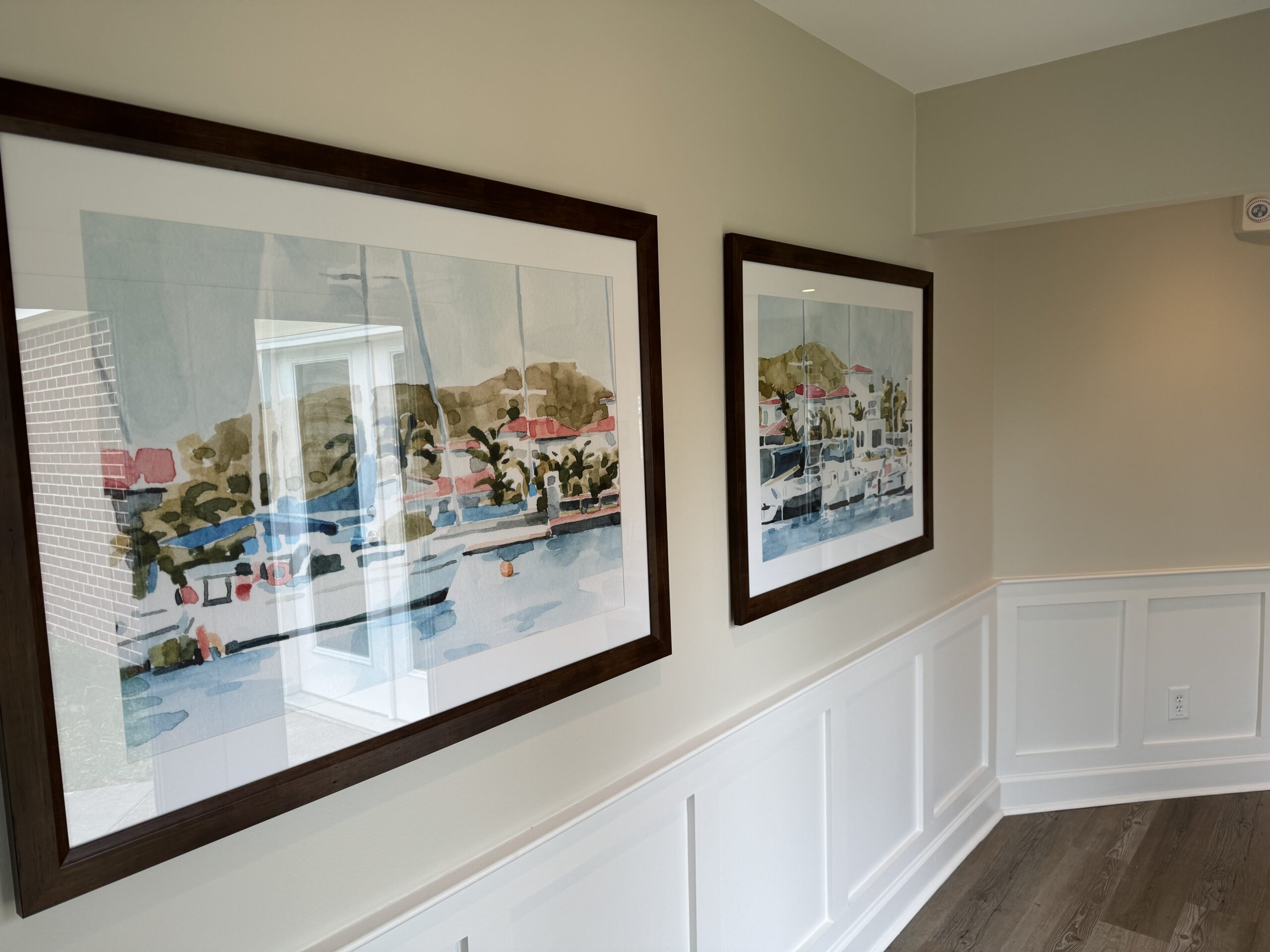
The design of a memory care environment shapes how residents experience it every day. Residents living with dementia and other forms of cognitive decline respond to their surroundings, and those surroundings shape their comfort and daily experience. Familiar imagery, presented with care, may offer some residents a sense of recognition. The artwork on the walls helps support the people who live there.
Why Familiar Imagery Matters in Memory Care Environments
Familiar images may offer recognition or comfort for some residents. This is especially true when an image reflects a person’s own history or places they once knew. Dementia affects individuals differently, so responses vary from one resident to the next and change over time.
When an image feels personally familiar, it may support comfort, engagement, or conversation. Responses vary widely, so communities should select artwork with resident and family input whenever possible and watch how people respond.
Choosing Imagery That Supports Residents
Subject matter deserves careful thought in these spaces. When artwork functions as a landmark or visual cue, recognizable, concrete subject matter is generally easier to interpret than abstract imagery. The right decorative piece depends on the residents and whether the image sits easy on the eye or reads as busy and ambiguous.
Color and contrast both shape the decision. Artwork should look visually calm without becoming low-contrast or hard to read. Clear subject matter, defined edges, and enough tonal contrast make images easier for residents with age-related vision changes or cognitive impairment to see.
Pictures of recognizable local scenes may add a sense of place, particularly when they reflect the histories of the residents who live there. Local does not automatically mean familiar, so each piece should earn its spot with the resident population in mind.
Framing and Placement in Memory Care
Framing choices support both safety and visibility in memory care environments. Matte or low-reflective glazing helps limit glare and reflections, making artwork easier to see under the space’s lighting conditions. Secure installation reduces the risk of a piece shifting or falling in busy communal and residential areas. In spots with close resident contact, designers may also choose durable frames with smooth edges and shatter-resistant glazing.
Placement matters too. Hang artwork where it stays visible from both seated and standing positions, without obstructing handrails, signage, or circulation. Distinctive artwork, used consistently to mark a particular neighborhood or destination, can supplement wayfinding. It works best alongside clear signage and good lighting.
Memory Care Framing with The Chessler Company
The Chessler Company works with senior living communities and designers to select, frame, and install artwork suited to memory care environments. We help you choose durable materials and imagery suited to the residents who live with it every day. Reach out to talk through your next project.