
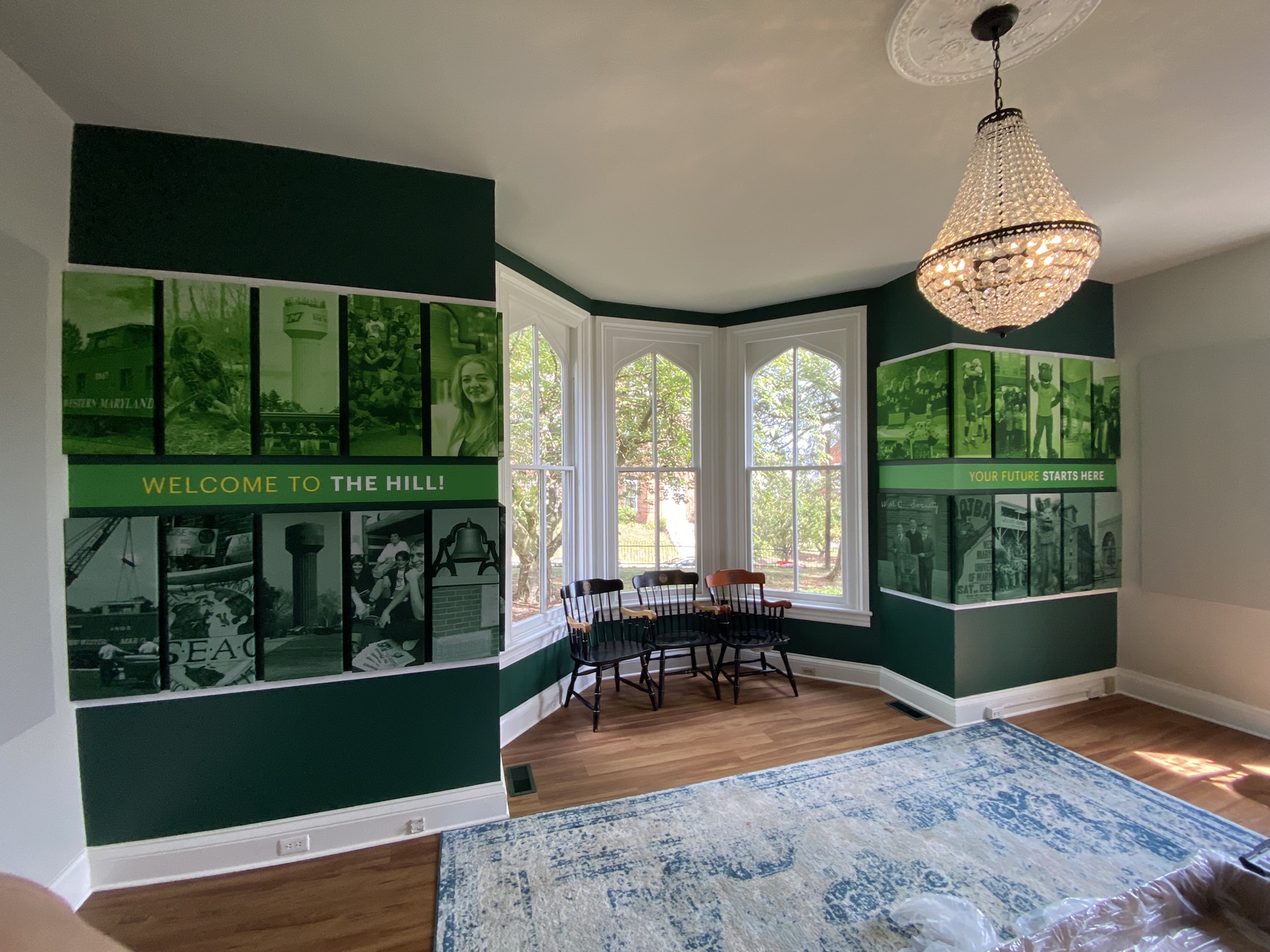
Art plays a meaningful role in how educational environments are experienced. From classrooms and libraries to hallways and student centers, visual elements help shape atmosphere, reinforce values, and create places that feel inspiring rather than purely functional. When approached thoughtfully, art in educational spaces can contribute to how academic environments are experienced.
Pairing artwork with intentional framing and professional installation ensures it remains accessible, durable, and visually cohesive across campus settings.
Using Art in Educational Spaces to Support Focus
Educational environments benefit from artwork that feels purposeful and easy to engage with. Visual clutter or distracting presentation can undermine focus, while clear, well-framed pieces help create calm, structured spaces that support learning.
Framing plays a key role here. Glare-resistant glazing, clean matting, and neutral frame finishes help artwork remain legible under bright classroom and hallway lighting. This is especially important for instructional displays, historical materials, and student work, where clarity and visibility matter.
Durability and Safety in Academic Environments
Schools and universities are high traffic by nature. Artwork displayed in corridors, common areas, and student gathering spaces must withstand daily movement while remaining secure.
Professional framing and installation help protect artwork from damage while supporting safety standards. Impact-resistant materials, secure hardware, and reinforced construction are particularly important in K–12 settings and busy university buildings. These considerations ensure artwork remains intact and aligned over time.
Durable framing also protects institutional investments, preserving artwork and displays for future students and programs.
Reflecting Identity and Community
Artwork across a campus often reflects institutional history, culture, and values. Alumni contributions, student exhibitions, faculty work, and archival imagery all contribute to a shared visual narrative.
Consistent framing helps unify diverse pieces across buildings while allowing individual works to stand on their own. Rotating student artwork or temporary exhibitions is common, and thoughtful framing ensures these transitions maintain a professional, cohesive appearance. Art in educational spaces can foster pride, connection, and a sense of belonging when presented with intention.
Presentation That Elevates the Environment
Even meaningful artwork can lose impact if it is poorly presented. Thoughtful framing elevates the perception of artwork, signaling care, respect, and attention to detail throughout the institution.
Frames should align with architectural styles and interior finishes, supporting the space without overpowering the artwork. Professional installation ensures proper alignment and longevity, particularly in spaces where displays may remain for years.
Custom Framing for Educational Spaces with The Chessler Company
Thoughtfully presented artwork strengthens educational environments. The Chessler Company partners with schools and universities to provide custom framing and professional installation tailored to academic settings. With a focus on durability, safety, and visual cohesion, our team helps ensure artwork enhances learning spaces and supports campus communities for the long term.