
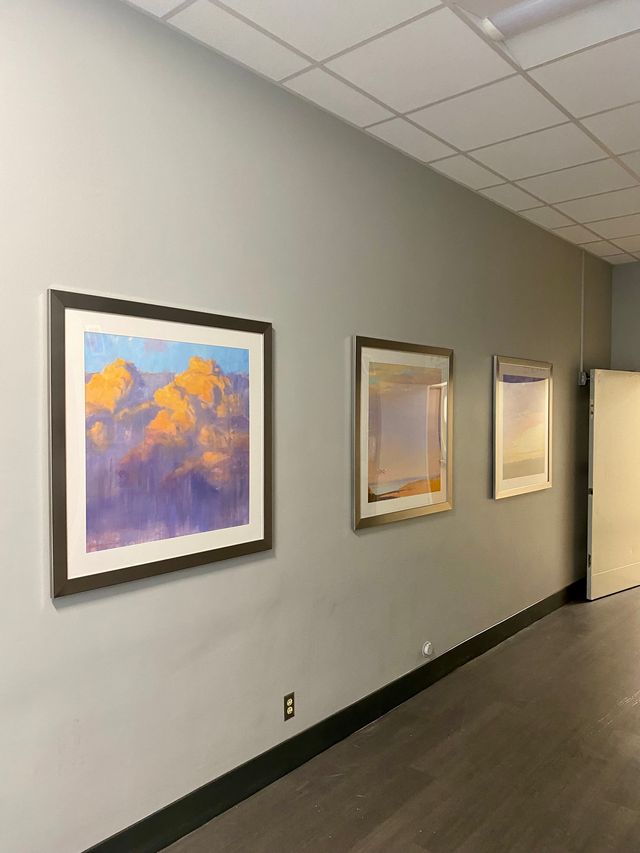
Hospitals can be stressful and confusing environments for patients, visitors, and even staff. Between long corridors and complex layouts, finding the right place can make a tough situation even more stressful. While directional signage plays a critical role in navigation, custom-framed artwork can be another great tool. The right artwork can create a more welcoming atmosphere and act as a visual landmark to guide people through the space more easily. Incorporating custom-framed artwork into your hospital is a strategic decision that can improve navigation, reduce anxiety, and enhance the overall patient experience.
How Can Art Be Used for Wayfinding
Before GPS was so common, landmarks were one of the most common ways to give directions without naming roads. Even now, how do you describe where to find the bathroom in a restaurant or public place? By describing the surrounding things! Custom-framed artwork can serve as a landmark when you’re trying to find your way, and it can be particularly valuable in stressful environments like a hospital.
Additionally, people tend to remember colors and images better than numbers. For example, a patient might not remember that they need to go to Room 515B, but they might remember that they need to make a right at the painting of a sunrise. The more intuitive the navigation system is, the better the experience.
Art Creates a Sense of Place
Hospitals often feel sterile and impersonal, which can add to the anxiety of patients and visitors. Custom-framed artwork can make large, neutral spaces feel more comfortable and familiar. When used as part of a wayfinding system, artwork can also create a sense of place.
For example, each floor or wing of a hospital could feature artwork in a different color palette or theme. The pediatric unit might have custom-framed artwork depicting animals, while the oncology department could feature calming landscapes. These thematic choices can also help visitors identify and remember locations more easily.
Art Makes Orientation Easier
Our memory relies heavily on visual and spatial cues. When hospitals use custom-framed artwork consistently and intentionally, it can aid in spatial orientation. Visitors can remember landmarks and retrace their steps by recalling what they saw along the way. A hallway with identical doors and generic signage might confuse someone trying to find their way back. However, the right artwork reduces confusion and reduces the need to stop and ask for directions, making wayfinding less stressful for patients and more efficient for staff.
Supporting Multilingual and Diverse Visitors
In many hospitals, patients and visitors speak a variety of languages, and not everyone can read at the same level. As a result, traditional signage may not always be fully effective. Custom-framed artwork can be a universal form of communication that rises above language and literacy barriers.
A visual wayfinding system based on recognizable images or themes can help multilingual populations navigate your facility more easily. For example, each department could use a distinct image, like a sunflower for radiology or a lighthouse for cardiology, to allow guests to use visual association rather than relying solely on reading.
The Chessler Company Can Help Make Wayfinding Easier
At The Chessler Company, we work with interior designers, multi-family property owners, healthcare facilities, corporate offices, and other businesses throughout the Mid-Atlantic region to create cohesive, memorable artwork experiences. Whether you need assistance with selecting artwork, framing it, or installing it, we are proud to be your one-stop shop for all of your art needs. Since 1959, our family-owned and operated company has been helping families like yours make memories last forever. To learn more about our framing services, call us at (410) 358-5161, and let us help you decorate your space!